Six months into running this kitchen, we still get the same question every week. Why bother with fresh? Kibble is cheap, easy, and has been keeping cats alive for sixty years.
It’s a fair question. Cats do live on kibble. The interesting question is what happens when they don’t.
How kibble is actually made
Kibble is an extruded product. Raw materials, usually a mix of meat meal, grain flour, fat, and a vitamin-mineral premix, get pushed through a screw at temperatures between 130 and 200°C, then forced through a die under pressure. Water flashes off as the dough exits, the dough puffs, and the pieces dry in a hot tunnel.
Two things follow from that process.
First, proteins are damaged. Lysine in particular, an amino acid cats need, is heavily affected by the Maillard reaction that runs during extrusion. Bioavailability drops even when the protein number on the label stays the same.
Second, the finished pellet is bland to a cat. Manufacturers compensate by spraying the surface with palatants, typically rendered animal digest, after drying. That’s the smell when you open the bag.
None of this is scandalous. It’s how the category works. It’s worth knowing before we get to what changes.
How fresh is actually made
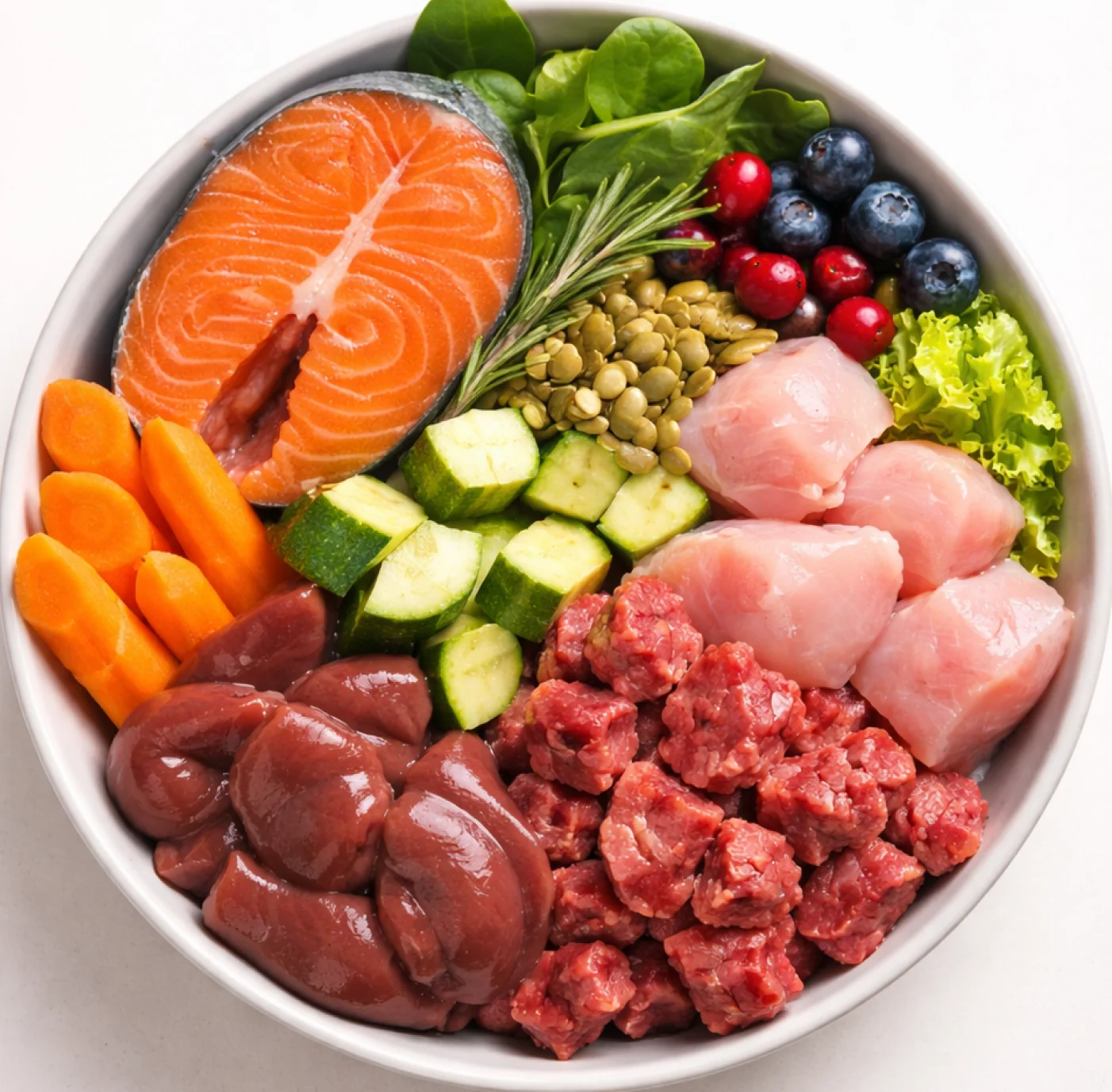
Our recipes start with whole muscle and organ meat from named Swedish farms. We grind, blend, gently cook to between 75 and 90°C, portion, blast-chill, and ship cold. No extrusion. No pressure. No surface spray. The cold chain does the work that preservatives do in shelf-stable food.
Cook temperature matters. At 75°C you pasteurise (kill pathogens) without doing the heavy structural damage to amino acids that 200°C extrusion does. Studies on lysine retention in pet food consistently show double-digit losses with extrusion and single-digit losses with gentle wet cooking.
The five things that change
When owners switch from kibble to a fresh diet, here’s what tends to shift, in roughly the order they notice.
1. Hydration
Kibble is around 8% water. Fresh food is around 70%. Cats descend from desert ancestors and have a famously weak thirst drive. They’re supposed to get most of their water from prey. On kibble they’re chronically under-hydrated. On fresh, urine output rises and concentration drops.
This matters because chronic kidney disease affects roughly 30% of cats over the age of ten, and concentrated urine is one of the drivers.
2. Stool quality
Smaller, firmer, less smelly. Higher digestibility means less waste passing through. It’s the most-mentioned change in our customer messages, and it shows up within a week.
3. Coat
Animal fat sprayed onto kibble after drying isn’t the same fat bound inside a fresh recipe. The fatty-acid profile of intact muscle fat is better preserved, particularly the omega-3s from oily fish that feed skin and coat oils directly. Owners usually see the difference around week four. Softer, glossier, less dandruff.
4. Bioavailable protein
Label protein is one number. Digestible protein is another. Fresh-cooked recipes typically deliver 90% or more of their protein in usable form. Extruded kibble is more variable, sometimes as low as 75%. For an obligate carnivore, that gap matters.
5. Energy
This one is harder to measure and easier to feel. Cats on fresh food tend to play in shorter, sharper bursts and sleep more deeply between. Whether that’s the hydration, the protein, the absence of carb load, or all three, is hard to separate.
When kibble still makes sense
We’re not absolutists. Kibble works better than fresh in real situations:
- You travel a lot and can’t run a cold chain at home.
- You have a free-feeder cat who grazes through the day and you can’t supervise meals.
- Cost is the binding constraint. A bag of supermarket kibble at 40 kr/kg is a real product that keeps real cats alive.
A reasonable middle path is fresh as the main meal, kibble as a topper or a backup. Plenty of our customers do exactly that.
What we cook
Four recipes. Chicken from Skåne and Halland, beef from Småland, pork from Östergötland, and a fish blend using MSC-certified cod and salmon. All four hit AAFCO complete-and-balanced for adult maintenance, with taurine added to the level the NRC’s Nutrient Requirements of Dogs and Cats specifies for cats.
We portion to your cat’s weight, age, and activity level (the two-minute quiz does the maths) and ship every two weeks.
If you want to know what to look for on any cat food label, fresh or kibble, we wrote the decoder ring. If you’re thinking about making the switch, the seven-day plan covers the practical bit.
The shorter answer to the question we started with: kibble feeds your cat. Fresh food nourishes them. The difference is real, it’s measurable, and you can see it in the bowl and in the litter tray inside a month.