Cats descend from solitary desert hunters. In that world, showing weakness gets you eaten. So a cat in pain or coming down with something tends to act like a cat that’s just having a quiet day. By the time the behaviour change is obvious, the underlying problem has often been running for weeks.
The job, then, is to know what your cat looks like when they’re actually well, so you can spot the small shifts before they become big ones. Here are the seven markers we suggest tracking, and the three signals that should send you to a vet.
The seven good signs
1. Coat
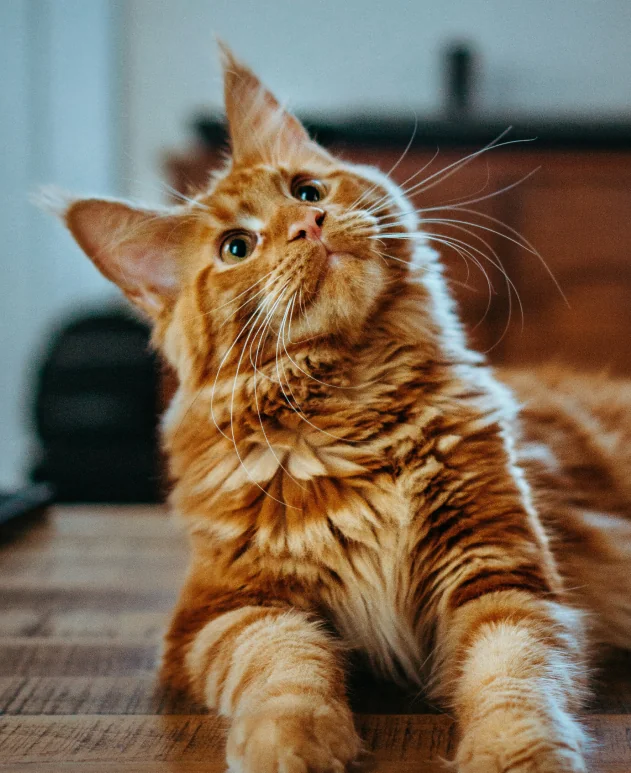
A healthy cat coat lies flat, feels soft to a flat-handed stroke against the lay of the fur, and reflects light without looking oily. There are no flakes at the base of the tail or along the spine. There are no bald patches, no thinning at the flanks, no clumps that come away in your hand. Long-haired cats may shed seasonally, but heavy shedding outside of spring or autumn is worth noting.
A quick weekly check: run your palm against the fur from tail toward shoulder. If you see dandruff or feel a roughness in the texture, something has changed.
2. Eyes
Clear. Pupils symmetrical. No third eyelid creeping in from the corner of the eye toward the centre (that nictitating membrane is a useful early-warning system; it shows when a cat is unwell). No discharge, no squinting, no rubbing.
3. Gums
Bubblegum pink. Not pale, not brick red, not bluish, not yellow. Lift the lip gently and press a fingertip against the gum above a canine tooth for two seconds. The spot you pressed should go white and return to pink within two seconds. This is capillary refill time, and it’s a rough proxy for circulation. Longer than two seconds means dehydration or shock.
4. Weight and body condition
You should be able to feel the ribs through a thin layer of fat, without seeing them. The waist should narrow visibly behind the ribs when you look down at the cat from above. There should be a small abdominal tuck, not a hanging belly.
This is Body Condition Score 4 or 5 out of 9, which is the healthy range. BCS 6 and above is overweight. Most clinic visits in Sweden put pet cats around BCS 6 or 7. The reason is mostly portion size, not food quality.
5. Litter tray
Once a day, formed but not hard, brown rather than black or pale, with a smell that’s not actively offensive when the tray is freshly used. Pale stool can mean pancreatic insufficiency or biliary issues. Black, tarry stool can mean upper-GI bleeding. Both warrant a vet call.
Urine: small clumps, two or three a day, light yellow. Larger or fewer clumps mean concentrated urine and possibly dehydration. Frequent tiny clumps can mean urinary tract irritation.
6. Energy and rest
A healthy adult cat sleeps about 14 to 16 hours a day. The rest is divided between short bursts of intense play, slow patrols, grooming, and watching things from a high perch. Both ends matter. Deep sleep and short bursts of mad energy are both good signs. What you don’t want is constant low-grade lethargy or constant restless pacing.
7. Hydration
The skin-tent test: lift a fold of skin on the scruff and let go. It should snap back instantly. If it stays tented for a second or more, your cat is mildly dehydrated. This is a useful baseline test to do once a week on healthy cats, so you know what “normal” looks like before you need to use it diagnostically.
The three to watch for
These are the changes that most often turn out to matter. None of them is a diagnosis on its own. All of them deserve a closer look.
Increased drinking
A cat that’s suddenly visiting the water bowl more often is one of the most common early flags for chronic kidney disease, hyperthyroidism, or diabetes, all of which are common in cats over ten. If you can measure it (a 500 ml jug refilled every two days suddenly needing to be filled daily, say), that’s worth a vet appointment.
Slow weight loss masked by long fur
Long-haired cats can drop 10% of body weight before it’s visible. Weigh your cat once a month if you can. A bathroom scale is fine: weigh yourself, then weigh yourself holding the cat, subtract. A trend of 1 to 2% loss per month, with no diet change, deserves investigation.
A new place to sleep
Cats often hide when they don’t feel well. A cat that’s started sleeping under a bed, behind a sofa, or in a closet when they used to sleep on a windowsill is telling you something. Pair it with any of the markers above and book a vet appointment.
What to check every week
A 60-second check that we run on the kitchen cat:
- Weight (bathroom scale, holding the cat).
- Gums (lift the lip, check colour and refill time).
- Coat (run a hand against the lay of the fur, look for flakes).
That’s it. Three measurements, sixty seconds, once a week. It catches more than you’d expect.
How fresh food shows up in these markers
When new customers switch from a kibble diet to ours, here is the rough timeline:
- Week 1: litter tray. Smaller, firmer, less smell.
- Week 2 to 3: water consumption drops. Cats getting moisture from food drink less from the bowl.
- Week 4 to 6: coat improves. Softer, glossier, less dandruff.
- Week 8 to 12: weight settles. Overweight cats trend down, underweight cats trend up, both at the safe rate of 1 to 2% per week.
If you’ve started tracking the seven markers above and you want to feed in a way that’s likely to move them in the right direction, the fresh-vs-kibble piece and the nutrition guide are where to go next. Most of cat ownership runs on small, consistent observations over years. The bowl is one of the few variables you fully control.