The phrase “obligate carnivore” gets thrown around a lot in cat food marketing. It’s accurate, and it’s also doing more work than most people realise. Here is what it means in the bowl.
What “obligate carnivore” actually means
A cat is an animal whose entire metabolism is tuned for a diet of meat. Not “prefers meat”, not “thrives on meat”, but evolved to require nutrients that exist only in animal tissue.
The domestic cat descends from the African wildcat (Felis lybica), and the split from a common ancestor with dogs happened roughly 40 million years ago. Cats joined human settlements only around 10,000 years ago, and in that time we have not asked them to do much. Dogs evolved alongside grain agriculture, lost some carnivore-specific traits, and grew a tolerance for starch. Cats did not. The pancreas of a modern housecat still produces less amylase than a dog’s. The liver still lacks the enzymes that convert plant precursors into the active vitamins and fatty acids cats need.
Everything that follows is downstream of those facts.
The eleven amino acids cats can’t make
Humans need nine essential amino acids in our diet. Dogs need ten. Cats need eleven. The extra one is the most famous, and the most consequential.
Taurine
Taurine is a sulphur-containing amino acid that’s involved in conjugating bile salts, regulating heart-muscle contraction, building retinal cells, and modulating the nervous system. Most mammals synthesise taurine from methionine and cysteine. Cats can do this only at trivially low rates. They have to eat it.
Worse, cats don’t store taurine. What they don’t use today, they excrete. Deficiency builds quickly and the consequences are severe:
- Dilated cardiomyopathy (DCM), in which the heart muscle weakens and the chambers stretch. Reversible if caught early. Fatal if not.
- Central retinal degeneration, leading to blindness.
- Reproductive failure in breeding queens.
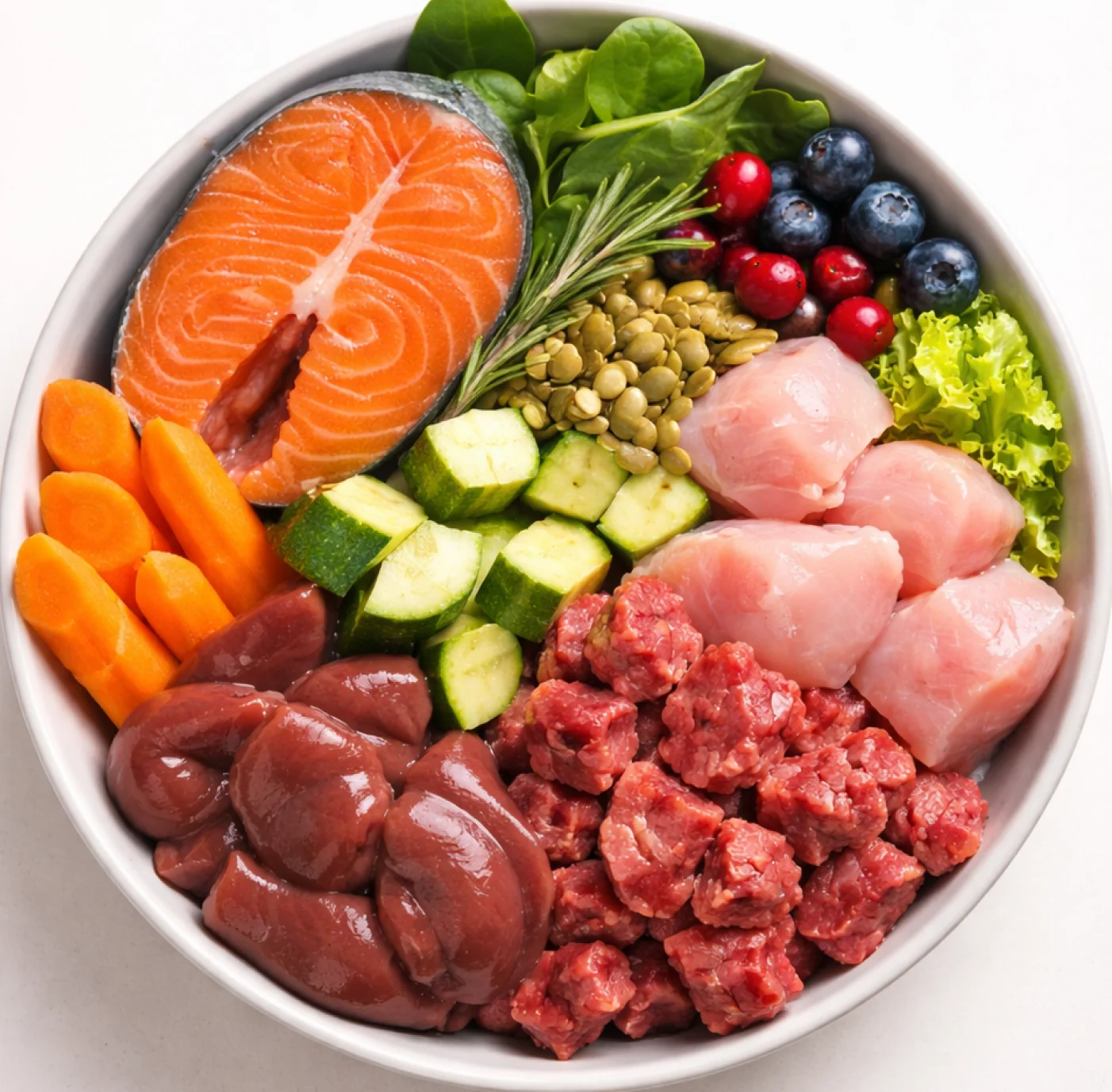
Taurine occurs almost exclusively in animal tissue. Muscle meat contains it. Heart and liver contain a lot of it. It’s why our recipes start with whole muscle and named organ inclusions rather than meal-based protein concentrates.
Arginine
The other amino acid worth singling out. Cats use arginine in the urea cycle, which clears ammonia from the blood. A single arginine-deficient meal can cause ammonia toxicity within hours. There is no margin here.
The other nine
Methionine, cysteine, lysine, threonine, tryptophan, phenylalanine, valine, leucine, isoleucine, and histidine. All present in muscle meat in roughly the proportions cats need. This is one reason “meat first” on a label actually means something.
Three things cats can’t synthesise from plants
Amino acids aren’t the only place cats diverge.
Arachidonic acid. An omega-6 fatty acid that mammals usually synthesise from linoleic acid (which is in plants). Cats lack the Δ6-desaturase enzyme that does this conversion. They have to eat arachidonic acid directly, and it exists in animal fat.
Vitamin A. Humans convert beta-carotene (from carrots and sweet potato) into retinol. Cats don’t. They need preformed vitamin A from animal liver.
Vitamin D3. Most mammals synthesise D3 in skin exposed to UV. Cats can’t, because their skin lacks the cholesterol precursor. They need D3 from the diet, which in nature means small whole prey.
Add these three to the eleven amino acids and you have fourteen specific nutrients that a vegetarian or vegan cat diet cannot deliver from plant sources alone. This isn’t ideology. It’s biochemistry.
How much protein, actually
The NRC recommends a minimum of 23% of metabolisable energy from protein for adult cats, and 26% for growing kittens. Most kibble lists 28 to 32% crude protein on the label.
The label number and the bioavailable number are not the same.
Extrusion at 200°C damages lysine and reduces digestibility. Plant proteins like wheat gluten and corn gluten meal pad out the label number but score lower for cats than animal protein on the same weight basis. A 30% crude protein kibble heavy in plant gluten can deliver less usable protein to a cat than a 25% fresh recipe built on muscle meat.
The label tells you what went in. It doesn’t tell you what comes out the other end of the digestive tract in a useful form.
From science to a feeding plan
If you have ten seconds at the supermarket and want to make a decent choice, look for two things.
First, a named species at the top of the ingredient list. “Chicken”, not “meat”. “Salmon”, not “fish derivatives”.
Second, an AAFCO or FEDIAF complete-and-balanced statement for the right life stage (adult maintenance, growth, or all life stages). This means the food meets minimum nutrient levels, including taurine.
That’s the floor. Everything above the floor (named muscle cuts, organ inclusions, cook method, country of origin) is where brands actually differ. We wrote a longer guide to label reading for owners who want to go deeper, and a piece on what fresh changes if you’ve started wondering whether kibble is the right baseline at all.
A cat is a small, beautifully tuned carnivore. Feed them like one and almost everything else about cat ownership gets easier.